
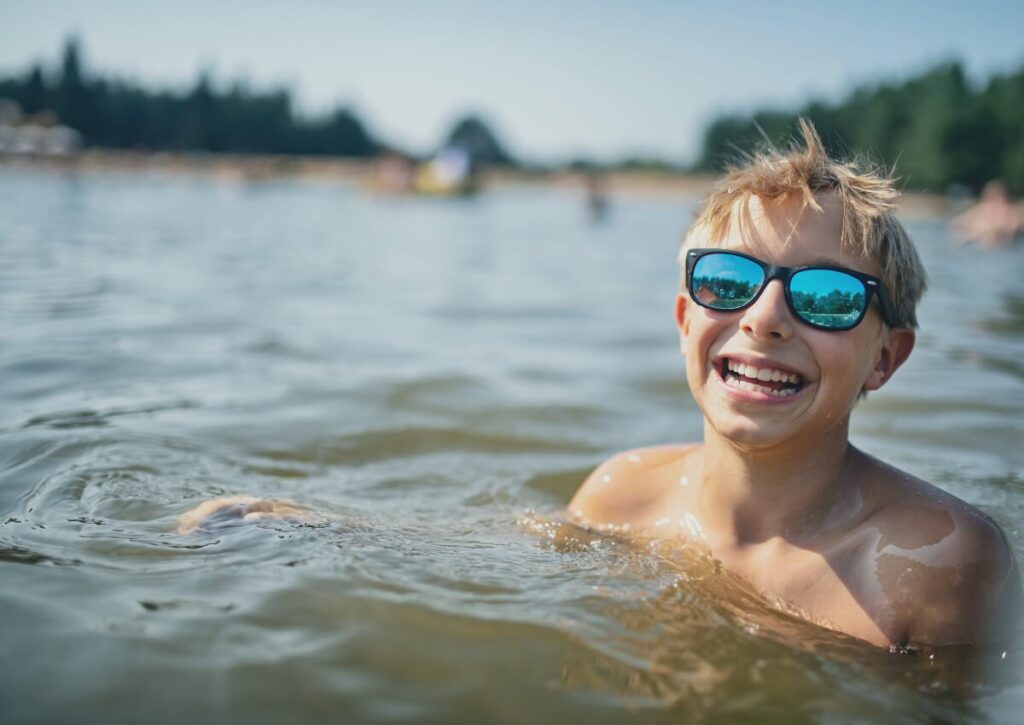
It’s summertime, which usually means spending more time outside. And with pools open and Michigan’s many lakes calling, that often means spending time in and around the water. While swimming and playing in the water are fun and provide great exercise, they can also be dangerous. Michigan uses a flag warning system along the Great Lakes to help beachgoers understand current water conditions and hazards. Because of the risks associated with lakes and pools, water safety for children with autism—and for all children—is extremely important.
Why water safety is so important for children with autism
Children with autism, as well as Down syndrome, often wander, which can be especially dangerous if they get close to water unsupervised. Additionally, drowning can occur silently. Children may also be unaware of factors such as water depth, water temperature, currents, or slippery surfaces. While not every child enjoys being in the water—particularly those with sensory sensitivities—all children should understand basic water safety in case of an accidental slip or fall into a pool or lake.
This statistic is sobering, but every parent of a child with autism should know it: drowning is a leading cause of death for children with autism. We’ve compiled some tips and ideas to help teach water safety and prepare your child for a safer summer.
Get your child in swimming lessons
Every child should learn to swim, and for children with special needs, it’s important that the skill is taught in a way that meets their individual needs. Make sure the learning environment isn’t too distracting or overwhelming for your child.
Many organizations offer adaptive swimming lessons for children with special needs. A great place to start is your local YMCA. The National Autism Association’s Big Red Safety Toolkit also provides excellent resources for preventing wandering and finding adaptive swim lessons in your area.
Provide reinforcers
Have reinforcers and preferred items available when your child completes important or challenging tasks related to water safety. This could include tolerating getting into the water, wearing appropriate safety gear, exiting the pool when a whistle is blown for “adult swim time,” or leaving the pool when instructed.
Visual learning of water safety
Use video modeling, social stories, or visual routines to teach water safety. The Swim Angelfish YouTube channel, for example, offers a variety of videos that can help teach water safety to children with disabilities.
Many children with autism are very rules-driven, so use that to your advantage. Establish clear rules for how they should behave around water, then practice those rules in real-life situations. If you have a pool at home or live near a lake, consider placing “STOP” or “DO NOT ENTER” signs on doors leading outside or on gates around the pool.
Use appropriate swim gear
Even if your child knows how to swim, using a properly fitted life jacket or other approved flotation device around water is a smart precaution, whether they plan to swim or not. It can also provide reassurance while learning new skills and building independence. The especialneeds website is a helpful resource for sensory-friendly and adaptive swim gear, if needed.
Teach key information
Because nearly 50% of children with autism wander at some point, make sure your child knows their name, address, and phone number in case they become separated from you. If your child is non-speaking, consider having them wear a bracelet, tag, temporary tattoo, or other form of identification with their name and your contact information.
Set up your environment vigilantly
Even if you feel confident your child understands water safety rules, accidents can still happen. Preparing your environment adds another important layer of protection. If applicable, consider installing fences or gates with alarms around pools or other bodies of water. You may also want to place alarms or chimes on doors leading outside and keep favorite toys away from the water when they’re not in use. These simple precautions can help reduce the risk of life-threatening wandering.
Communicate with others
Talk with your neighbors, whether you’re at home or on vacation. Ask them to contact you immediately if they see your child wandering alone outside your home or property. Even if you don’t own a pool, but your neighbors do, ask them to be particularly aware of your child wandering near their property.
We hope these ideas help you implement water safety strategies for your child with autism. And for more general recommendations for pools, beaches, lakes, and other water activities, be sure to check out this swimming safety guide. We hope you and your family have a safer, less stressful, and more enjoyable summer!
If you found this information helpful, we’d love it if you’d share it with others!