Following an autism diagnosis, many professionals recommend ABA Therapy as the first form of support. But many parents often leave those meetings wondering, what is ABA Therapy? It’s common to have lots of questions. It’s important to feel informed and clear about treatment options as you seek support for your child. Not to mention, choosing a therapy provider can be overwhelming and take a lot of time. We’ll break down some commonly asked questions about what ABA Therapy is so you can feel prepared to help your child.
What is ABA Therapy?
Considered the “gold standard” in autism treatment, ABA (Applied Behavior Analysis) Therapy is a scientific approach to understanding behavior. It’s a method of therapy used to improve specific behaviors, decrease interfering behaviors and help individuals gain new skills such as communication, play, social, and daily living skills. ABA Therapy is evidenced-based and the most frequently recommended option for the treatment of autism.
Is ABA Therapy effective?
ABA Therapy proves to be highly effective, based on over 50 years of research. Medical professionals and institutions such as the American Psychiatric Association, the American Psychological Association, and the U.S. General Surgeon approve ABA as a valid treatment for autism.
BCBAs (Board Certified Behavior Analysts) and Behavior Technicians create and implement plans to help clients meet goals tailored to their needs. They set clients up for success by breaking each goal into manageable steps. If an approach isn’t working, the BCBA and Behavior Technician will try a different one. For example, a child may be working on regulating emotions during tantrums. The child’s therapy team might use tactics such as deep breathing, sensory input, or physical relaxation. If sensory input aggravates the child, that tactic is removed and replaced with a more helpful one.
Is ABA Therapy a fit for my family?
Parents love their children and want what’s best for them, no matter their diagnosis. You may be wondering, how can ABA Therapy help my child? All children have the right to learn important skills to be independent and maximize their happiness later in life. For children with autism, learning some skills can be harder than for children who don’t have autism. ABA Therapy can build on your child’s strengths while also supporting their learning in the areas they need it most.
In deciding if ABA Therapy is a fit for your family, it’s important to understand the provider’s approach to ABA. ABA Therapy should be customizable to your child’s needs, with an emphasis on generalization to make sure skills transfer to the natural environment – like home, school and out in the community.
Additionally, it’s important to know the BCBA’s credentials and understand the center’s training program for Behavior Technicians. This ensures they are qualified for the work they provide. Another factor is ensuring a positive, comfortable relationship that allows room for learning. There should also be frequent, open communication between you, as the parents, and your child’s BCBA.
At Healing Haven, parents receive regular parent training with their BCBA. This helps build goals that are appropriate and sensible for your family while equipping you with strategies to continue your child’s learning when they are not in our clinics. Remember, you know your child best. It’s important to find professionals who align with your specific values.
What is a BCBA?
According to the Behavior Analyst Certification Board, “A Board Certified Behavior Analyst, or BCBA, has a graduate-level certification in behavior analysis. Professionals certified at the BCBA level are independent practitioners who provide behavior-analytic services. BCBAs may supervise the work of Board Certified Assistant Behavior Analysts (BCaBAs), Registered Behavior Technicians (RBTs), and other professionals who implement behavior analytic interventions.” BCBAs also work with parents, caregivers, and school professionals to help therapy translate across situations and settings. They ensure strategies carry over wherever the client learns, plays, and interacts.
To become a BCBA, an individual must complete a five-step process. This includes earning a relevant master’s degree and completing required behavior-analytic graduate coursework. Candidates must also complete required supervised fieldwork. They then apply for, take, and pass the BCBA exam. Finally, they must apply for state licensure.
What do Behavior Technicians do?
Behavior Technicians are trained behavioral professionals that work closely with and under the supervision of BCBAs. They help implement behavioral goals set for the client. As a team with the child and BCBA, the technician will help teach functional skills and address problem behaviors that interfere with learning. They also help the child gain skills that will allow them to better participate in school and the community.
What happens during an ABA session?
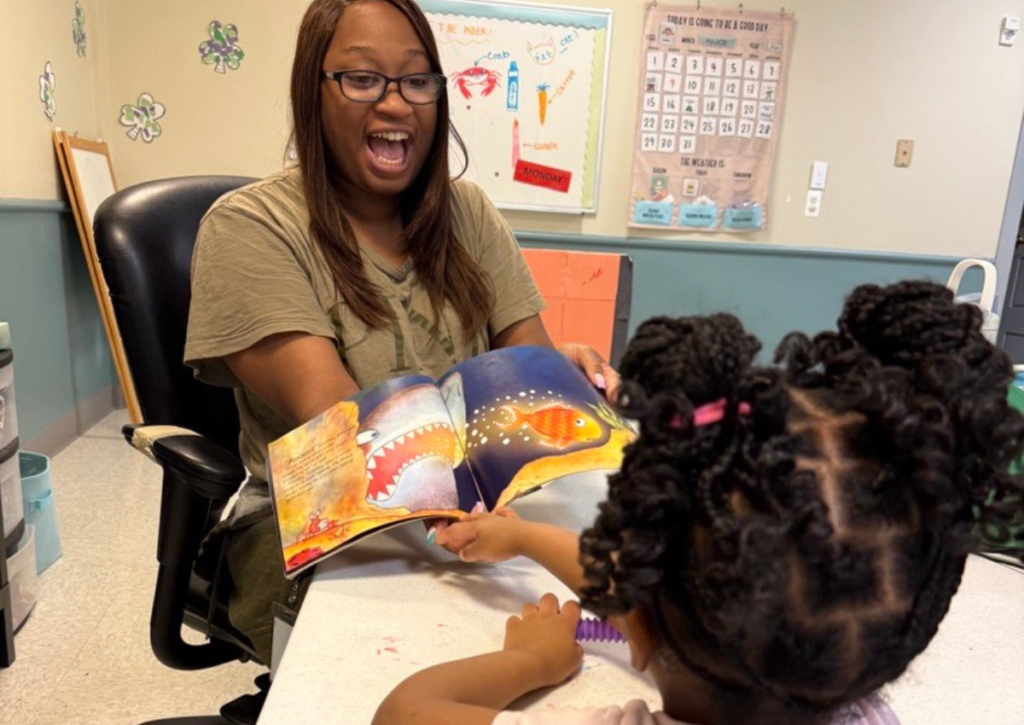
An ABA session typically begins with specific goals established for the individual before therapy sessions begin. During the session, the Behavior Technician works one-on-one with the individual. Their job is to ensure the individual learns and understands the skills being taught. Behavior Technicians use encouragement, praise, and other motivational tactics tailored to the individual and their programs. Therapy is delivered both with and without supervision from the BCBA.
Kate Fritz, MA, BCBA, LBA, is our Vice President of ABA Operations. She describes a typical ABA session at Healing Haven this way:
In ABA sessions, we work hard and play hard! How an ABA session looks can greatly vary depending on the client’s age and skillset – programming is individualized to the client. In general, you can expect to see the use of play to work on communication and social skills, building up independence with daily living skills (e.g., working on putting on a winter coat), and both individual and group times to work on behavioral goals related to school-readiness. In action, this may look like a kid sitting in circle time imitating song motions, then reading a story with their therapist and pointing to animals and colors throughout the story, sitting and eating snack with peers, going to the restroom to work on washing hands independently, then heading to the playroom and pointing to toys up on a high shelf to communicate what they want to play with.
When should my child start ABA?
A child should start ABA Therapy if deemed appropriate after receiving a medical diagnosis of autism spectrum disorder. For example, clinicians can detect and test for autism as early as 18 months old, and by age 2 they can consider the diagnosis reliable for guiding therapy intervention.
Early intervention is key. “Research very clearly states that early intervention for children with autism and other developmental disabilities is vital,” explains Jamie McGillivary, MS, LLP, BCBA, Founder and Chief Innovation Officer of Healing Haven. “When children start therapies like ABA early on, they receive strategic learning opportunities that support them in the areas they need.”
However, ABA Therapy is also beneficial for older children, teenagers, and even young adults. Even if an individual is diagnosed later, ABA therapy could be worth looking into to learn and improve in areas that may be challenging for them. It is also important to remember that ABA Therapy isn’t automatically a lifelong commitment. Many children transition to lesser levels of therapy as they master skills.
Is ABA Therapy covered by insurance?
Because most insurance policies consider ABA Therapy a behavioral health service, they typically cover it. However, this can vary by plan and from state to state. In Michigan, it can vary by employer insurance plans, so it is important to call your insurance provider. It’s crucial to discuss the specifics of what is and what isn’t covered by your plan as it pertains to ABA Therapy services in your location. More information about this can be found when you search “Autism Spectrum Disorder Health Coverage” on your state government website. For example, Michigan’s explanation of autism health coverage is found here. The Autism Alliance of Michigan is also a great resource for parents navigating insurance coverage.
We hope this information is helpful as you navigate therapy options for your child. To learn more about Healing Haven’s ABA Therapy programs for children, teens and young adults, contact us today.